

Tigray faces another serious escalation of violence
The resumption of fighting in northern Ethiopia is deeply concerning, as Tigray faces another serious escalation of violence. The Fundació CIS Ángel Olaran is paying particular attention to the situation in Wukro, in the Tigray region, where we have supported vulnerable children, families and older people for years. At present, difficulties communicating with the region make it especially hard to know what is happening in each locality.
A population still recovering from war
Between 2020 and 2022, the war in northern Ethiopia caused immense suffering, displacement and serious disruptions to access to food, health care and basic services. On 2 November 2022, the Ethiopian Government and the Tigray People’s Liberation Front (TPLF) signed an agreement in Pretoria for a permanent cessation of hostilities, mediated by the African Union.
The agreement opened the way to expand humanitarian assistance and restore essential services. Yet the consequences of the war had not disappeared: many people remained displaced and numerous families still faced difficulties rebuilding their lives.
What is happening now?
Since 22 September, new clashes have been reported between the Ethiopian federal army and forces linked to the TPLF in Tigray and the neighbouring regions of Amhara and Afar. The two sides give differing accounts of how the hostilities began. Flights to the airports of Mekelle, Axum and Shire have also been suspended.
From 24 September, telephone and internet communications were disrupted across much of Tigray. Reuters found that on the 25th it could not connect to Ethio telecom numbers in the region, while some Safaricom users retained limited connectivity. The news agency reported conflicting accounts of who ordered the shutdown. For now, we have no independent confirmation of its cause or that services have been restored to normal.
Local media have also reported difficulties using certain banking and transfer services. This affects access to money, but the available information does not establish that all banks in Tigray have closed.
For families, these disruptions may mean being unable to speak to loved ones or having trouble meeting everyday needs. For humanitarian organisations, they complicate coordination and the receipt of reliable information.
Humanitarian aid must be protected
A colleague of the Foundation has sent us a statement from the Tigray Disaster Risk Management Commission (TDRMC) alleging a drone attack, reportedly on 20 September, against a truck carrying food for displaced people in the Sheraro area. The statement reports injuries and the destruction of the aid but does not identify those responsible for the attack. Protecting humanitarian teams, supplies and civilians must be a priority.
Statement on the devastating drone attack on a humanitarian aid truck and obstruction of assistance, 20 September 2026:
“The Tigray Disaster Risk Management Commission (TDRMC) expresses its deep concern over the alleged drone attack of 20 September 2026 on a transport truck of the Adigrat Diocesan Catholic Secretariat (ADCS). The vehicle was carrying humanitarian food assistance supported by Catholic Relief Services (CRS) and the United States Government. According to information received, the incident took place in the village of Swudey, Hibret kebele, between Adi-Dero and Adi-Nebried, in northwestern Tigray.
The attack caused serious material damage and left people injured. The destroyed food was intended to help particularly vulnerable displaced people in the town of Sheraro survive; they have no viable alternatives for meeting their basic needs.
Drone attacks in Tigray are not new. Repeated air and drone strikes have posed serious difficulties and security risks for humanitarian operations and have hampered daily efforts to mitigate the effects of the drought caused by El Niño and to carry out other related activities throughout the region. These attacks have caused serious damage, widespread destruction and the tragic loss of civilian lives and property.
The Commission strongly condemns any attack that endangers humanitarian personnel, aid assets, civilians or supplies essential to saving lives at this critical time. Humanitarian operations must be protected, and their personnel must be able to work safely, impartially and without interference.
This tragedy comes as Tigray faces several simultaneous crises: the aftermath of war; widespread displacement affecting millions of people; economic disruption; restricted access to fuel and cash; and severe limitations on essential services. Added to this is a drought linked to the El Niño phenomenon, which has severely affected more than 37 woredas and 308 kebeles. Its effects on food security, agriculture, water, health, nutrition, social protection and livelihoods have created an urgent need for emergency responses across several sectors.
Attacks on trucks carrying humanitarian food aid can worsen suffering, harm relief operations and undermine the confidence and security of humanitarian organisations. At this critical time, solidarity and collective responsibility are essential.
The Tigray Disaster Risk Management Commission calls on humanitarian organisations, government authorities, donors, international organisations and the people of Tigray to:
• -Condemn attacks on humanitarian operations.
• -Ensure the protection of humanitarian personnel, assets and supplies, and civilians.
• -Ensure the uninterrupted delivery of life-saving assistance to vulnerable communities in urgent need throughout the region.
We urge humanitarian actors not to allow this incident to weaken their commitment to humanitarian principles or prevent them from reaching those in urgent need of help. Although protection and safety remain priorities, communities must continue to receive support to survive and recover.
The people of Tigray face immense humanitarian challenges. Now more than ever, humanity, impartiality and solidarity must guide collective action. On behalf of the Government and people of Tigray, the Commission expresses its gratitude to all humanitarian organisations that continue to support vulnerable communities in extremely difficult circumstances.”
UMD Media also reports a statement by the Catholic Eparchy of Adigrat and its humanitarian secretariat about the same incident. Both institutions describe the destruction of food aid, but their statements do not identify who operated the drone. We therefore attribute the account to those who made the statements and do not present responsibility for the attack as established.
Statements by the European Union
The protection of civilians, humanitarian personnel and aid supplies must be a priority. In its statement of 23 September, the European Union called for immediate de-escalation, a return to dialogue and respect for international humanitarian law, including the protection of civilians and humanitarian operations. It also condemned attacks affecting humanitarian convoys and restrictions on access for aid.
In a further communication published on 28 September, the European Commission reiterated its concern about the deteriorating situation in northern Ethiopia and called for the protection of civilians and unhindered humanitarian access. It announced an additional €18 million to meet humanitarian needs in Ethiopia, bringing EU assistance to the country to €61 million in 2026. The total funding announced is subject to approval by the budgetary authority.
The African Union
The African Union has also urged the parties to stop actions that could worsen the situation and to resume talks within the framework of the Pretoria agreement.
We remain alongside Wukro
Our concern is for people: children, families, older people and those who were already facing poverty, displacement or food shortages before this new escalation.
This crisis does not weaken our humanitarian commitment. At the Fundació CIS Ángel Olaran, we want to continue working with local people and organisations to support those who are most vulnerable and help communities survive and recover. We are guided by humanity and by attention to each person’s needs, without distinction.
The protection of those we support and those providing aid is a priority. We will continue trying to maintain contact with our partners and adapt our work to security, access and communication conditions. We will share information about Wukro when we can verify it.
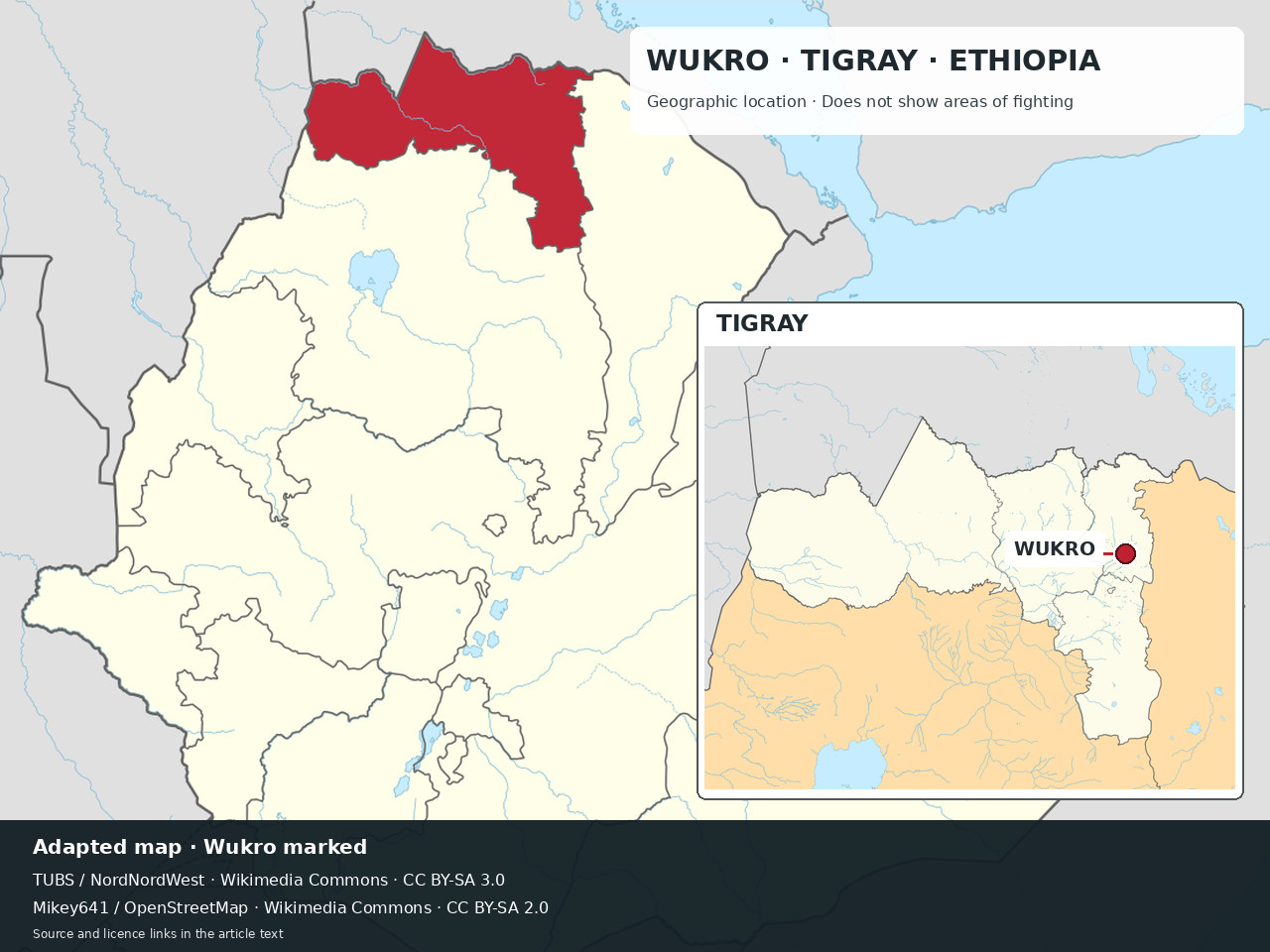
Map credits
Adapted from Tigray in Ethiopia, by TUBS and NordNordWest, licensed under CC BY-SA 3.0, and Tigray Region Ethiopia location map, by Mikey641 and OpenStreetMap contributors, licensed under CC BY-SA 2.0.
Ángel Olaran’s voice: a call to prevent another war
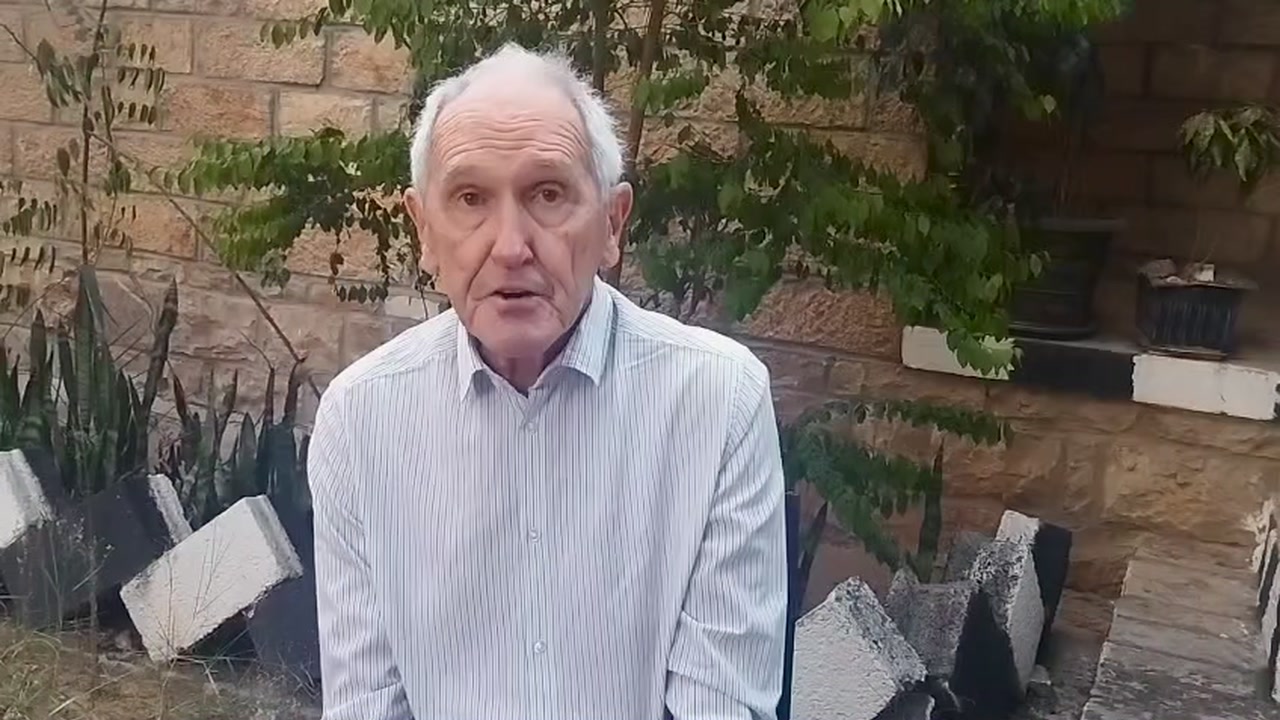
In September 2025, Ángel Olaran expressed his concern about the difficulties families in Tigray continued to face after the Pretoria agreement and the risk that political divisions could lead to renewed fighting. His words have particular resonance in the current situation: protecting the population and pursuing dialogue remain urgent.
You can read his testimony in «I hope we say never again to a war between brothers».

Understanding the earlier situation in Tigray
In our September 2025, «Tigray struggles to rebuild its future in peace», we described the difficulties families still faced after the war: displacement, shortages of food and medicine, few opportunities for young people and uncertainty about implementation of the Pretoria agreement. That article helps explain why the current escalation is particularly alarming for a population that was still trying to recover.
With the collaboration of